
Ex-QB Hasselbeck joins effort to find CTE in living
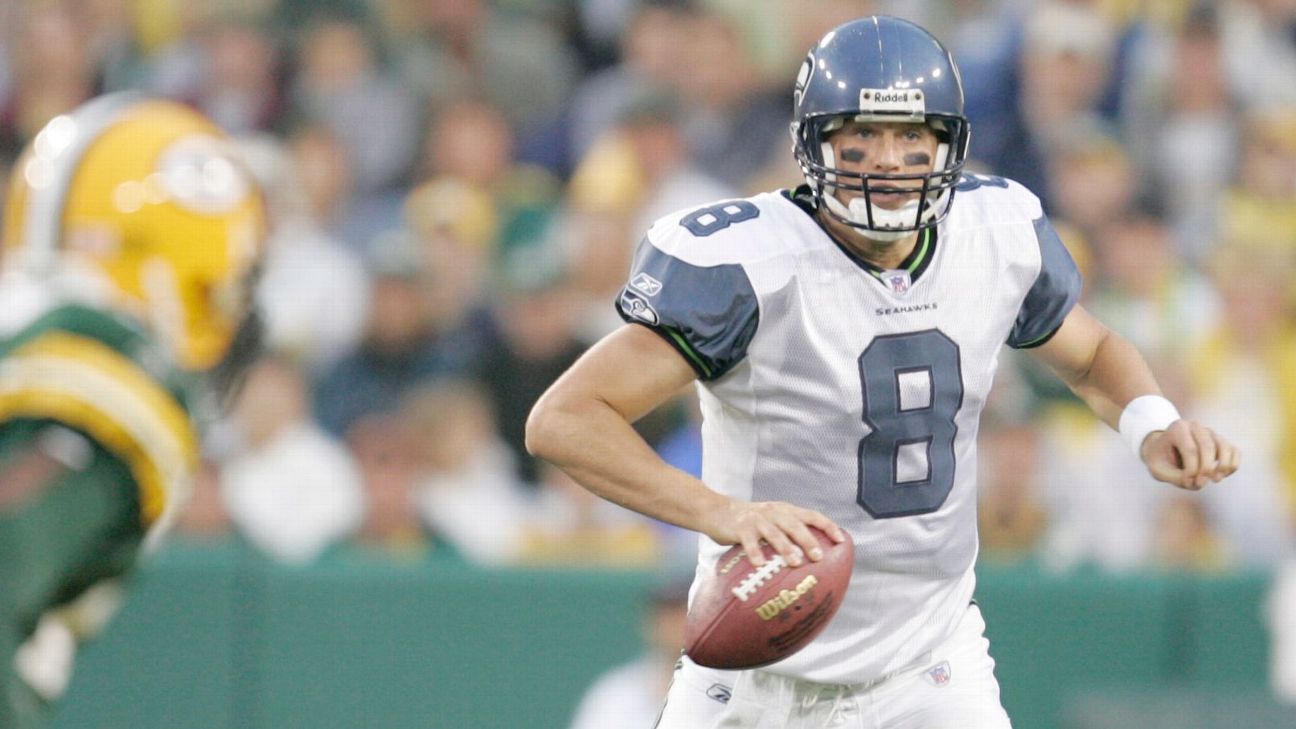
Ex-QB Hasselbeck joins effort to find CTE in living --> Skip to main content Skip to navigation MenuESPN scores NFLNBAMLBSoccerWNBANHLNCAAFMore SportsBoxingNCAACricketF1GamingGolfHorseLLWSMMANASCARNLLNBA G LeagueNBA Summer LeagueNCAAMNCAAWNWSLOlympicsPLLRacingRN BBRN FBRugbyBananasSports BettingTGLTennisUFLMen's World CupWWEProfessional WrestlingEditionsWhere to WatchFantasyWatch NFLHomeScoresScheduleStandingsStatsTeamsOddsFantasy FootballWhere To WatchDepth ChartsInjuriesTransactionsDraftOddsFree AgencyCoachesPlayoff BracketSuper BowlFootball Power IndexPlayersScheduleWeekly LeadersTotal QBRNFL HistorySuper Bowl WinnersTickets Ex-QB Hasselbeck joins effort to find CTE in living3hSource: Ravens get good news on Wiggins injuryBaltimore Ravens19hJamison HensleyNacua exits with groin soreness; Garrett sidelinedLos Angeles Rams17hSarah BarshopCBS: 'No timetable' on Romo's future after arrestDallas Cowboys16hCarter on Hurts' increased speed: 'Like a movie'Philadelphia Eagles19hTim McManusKarabell's 'Do Not Draft' list: Giants' young trio among players being overvalued6dEric KarabellWhat Kyler Murray as QB1 means for Vikings and J.J. McCarthy's futureMinnesota Vikings18hKevin SeifertWhy the 2026 season is critical for the long-term futures of Bo Nix and the BroncosDenver Broncos4hJeff LegwoldNFL training camp updates: Purdy impresses in joint practice against Titans11hNFL NationIntel from NFL training camps: What Fowler, Graziano and Solak learned at 11 more practicesSan Francisco 49ers1dJeremy Fowler, +2 More'We thought we had arrived': Inside Dan Quinn's master plan to revive the CommandersWashington Commanders3hJohn KeimFantasy football buzz: News or noise? What to make of Lions and Chargers camp quotes20hESPN FantasyMike Clay's Playbook, Part 2: Draft tips for nontraditional formats3hMike ClayWhat we're hearing and seeing at Falcons training camp: Tagovailoa coming on strongAtlanta Falcons20hMarc RaimondiSteelers: Rodgers says preseason games are not for him15hBrooke PryorBengals: Burrow among starters to see action Thursday15hBen BabyChiefs: WR Armstrong pushing for roster spot15hNate TaylorBills: Palmer becoming reliable WR option15hAlaina GetzenbergSaints: Offense, defense go at each other to end practice15hKatherine TerrellLions: S Kerby Joseph progressing in rehab15hEric WoodyardJaguars: Defense dominates depleted O-line15hMichael DiRoccoGiants: Harbaugh's priority is to stop the run15hJordan Raanan'This is beautifully done': See inside the new Highmark Stadium as Bills practice and fans take it inBuffalo Bills4hAlaina GetzenbergDo NFL superteams actually win? Barnwell sized up historic big favorites -- and the 2026 RamsLos Angeles Rams2dBill BarnwellNFL preseason on NFL Network, ESPN: How to watch, schedule12dESPNEx-QB Matt Hasselbeck part of quest for living diagnosis of CTEAssociated PressMultiple AuthorsAug 12, 2026, 06:40 AM ETEmailPrintOpen Extended ReactionsPHOENIX -- Matt Hasselbeck took some nasty hits to the head during his 17-year NFL career, four years at Boston College and a childhood full of sports, but the quarterback seems to have emerged from more than two decades of collisions relatively unscathed, enjoying middle adulthood with his wife and three children. The 50-year-old knows that some of his friends and former teammates haven't been as lucky. That's why the three-time Pro Bowl selection recently spent two days at Boston University, going through a battery of scans and tests to determine how much all those collisions affected his brain. The hope is that it will be a small step toward a goal that has eluded doctors: diagnosing chronic traumatic encephalopathy in the living. "They need guys like me. They need people who are feeling good to step up to the plate and volunteer," Hasselbeck said. "I played quarterback, so I didn't take some of the hits that a lot of my teammates took. "But the guys who were blocking for me, or playing special teams, or trying to get the ball back for me on defense, I wanted to do something. They had my back, so in a way I'd like to have their back." A degenerative brain disease that has been linked to concussions and other head trauma common in military combat and contact sports, CTE has been diagnosed in more than 100 former NFL players, casting a pall over the United States' most popular sports league. Some high-profile football players diagnosed with CTE after their deaths include Hall of Famers like linebacker Junior Seau and quarterback Ken Stabler, along with former New England Patriots tight end Aaron Hernandez. CTE can affect regions of the brain involved with regulating behavior and emotions. This can lead to memory loss, depression, violent mood swings and other cognitive and behavioral issues, though researchers note these symptoms can also be linked to other illnesses. Hasselbeck's participation is just a small part of a study that Michael Alosco, co-director of clinical research at the Boston University CTE Center, hopes will expand to hundreds of participants in multiple locations. Alosco is the principal investigator in Boston, and there are also sites in California, Arizona, Texas and Florida with potentially more to come. The study seeks two types of people: those who played professional or college football and those who have been diagnosed with Alzheimer's disease and never played contact or collision sports and have no history of repetitive head impacts. Alosco said there are many similarities between Alzheimer's and CTE because both are degenerative brain diseases, but there are some key differences and mapping out those discrepancies is key to figuring out a way to diagnose CTE properly. "We've applied what we've known worked for Alzheimer's disease, but we've learned it does not work for CTE," Alosco said. "We've really got to push discovery efforts and find the marker that's specific to the protein of CTE versus Alzheimer's because they're different. "How we're going to get there is through the research we're doing right now." Matt Hasselbeck played quarterback for four NFL teams over 17 seasons. He said he committed to aiding CTE research to give back to his former teammates. Mike Roemer/AP PhotoNicholas Ashton, the principal investigator in Phoenix, said roughly 10 patients have participated at the Arizona site. He said diagnosing CTE in the living is currently mostly guesswork because so many of the symptoms mimic Alzheimer's. "The more people involved, the more information we get and the closer we get to an answer," Ashton said. "Treatments exploded with Alzheimer's once we were able to accurately diagnose. We're trying to get to the same spot with CTE." Hasselbeck said he went through a variety of mental tests, like counting backward from 100 by sevens and reciting the alphabet backward. He had a blood sample taken, an MRI on his brain and a PET (positron emission tomography) scan that injects a small amount of safe radioactive tracer that maps out the brain's function. The former quarterback said the procedures were eye-opening and humbling. "I've got a healthy respect for people who are dealing with serious brain trauma, whether it's tumors or cancer," Hasselbeck said. "I walked in there feeling completely healthy, and you still get a little anxious when you're doing a brain scan, an MRI. You come out, and you're looking at your brain." Hasselbeck is also donating his brain for research after he dies. Bryan Savage, a 56-year-old who lives in Maryland, is a former linebacker at Division III Union College in Schenectady, New York. He traveled to Boston for the study and has also committed to donating his brain. Savage said he is lucky to be relatively healthy but that he has been diagnosed with depression and ADHD over the past few years. "I was interested because of some of the things that I've gone through physically and mentally," Savage said. "You wonder if it's just getting older, a midlife crisis or if it's related to any brain trauma I might have had playing football." Savage praised the researchers and said he was relieved to find out his brain scans look normal for a man in his mid-50s. He has reached out to some of his former teammates, encouraging them to get involved in the study. "I'll talk to some of my former friends, and they're going through a lot of the same things," Savage said. "They'll say, 'Why do I feel like this? I've never been depressed. Things that I used to be passionate about I don't care about anymore.'" Alosco said the main reason Alzheimer's research is much more advanced than CTE research is sheer numbers: Alzheimer's research dates back decades, and countless people have been studied. By comparison, CTE research is relatively new. Volunteers like Hasselbeck and Savage are crucial to bridge the gap. The National Institutes of Health is sponsoring the current study, awarding $15 million for the research in 2025. "The [Alzheimer's progress] is through years and years of research, of people donating their brains, and also collecting data during life," Alosco said. "While we've been studying CTE for a while, we haven't had the point where we've had all this data during life, that have also donated their brain. We need to get to that place." He added: "I'm really hopeful about detecting CTE. I don't think that's too distant. Once we can accurately diagnose, that's when we can start some treatment trials." Hasselbeck, who played for the Green Bay Packers, Seattle Seahawks, Tennessee Titans and Indianapolis Colts, said he had three concussions before he even started college: one playing football, another on the basketball court and another while goofing around while ice skating. He had a few concussions during his college or NFL career but wasn't sure of the exact number because some might have gone undetected since there was a culture of toughness in locker rooms, particularly early in his career. Hasselbeck's pro career spanned from 1998 to 2015, and he said there was a huge change regarding head injuries during that time. Early in his career, the only acceptable answer after a hit to the head was "I'm good," but by the mid 2010s, players were much more honest about potential concussions. Hasselbeck's proud of that change. Now he hopes his participation in the CTE study can continue that progress. "I've always had a passion for making the game safer," said Hasselbeck, who served as an ESPN analyst from 2016 to 2023. "I love football. One of the things I'm most proud of as an NFL guy is not just as a player, but the entire time I worked with the league and NFLPA for ways to make the game safer."
Source: ESPN
This article has been carefully curated and reformatted for educational and informational purposes. Full credit goes to the original publisher.
📚 Visit more helpful articles on Joab Peters Blog


No comments